 2026-07-12
Smart Classrooms: Transforming Education Through Technology
Education has evolved significantly over the past few years, and technology has become an essential part of modern classrooms. Our Smart Classroom initiative is designed to provide students with an engaging, interactive, and innovative learning environment where education goes beyond traditional teaching methods. By integrating digital tools, multimedia resources, and interactive teaching techniques, students are encouraged to actively participate in every lesson while developing critical thinking and problem-solving skills.
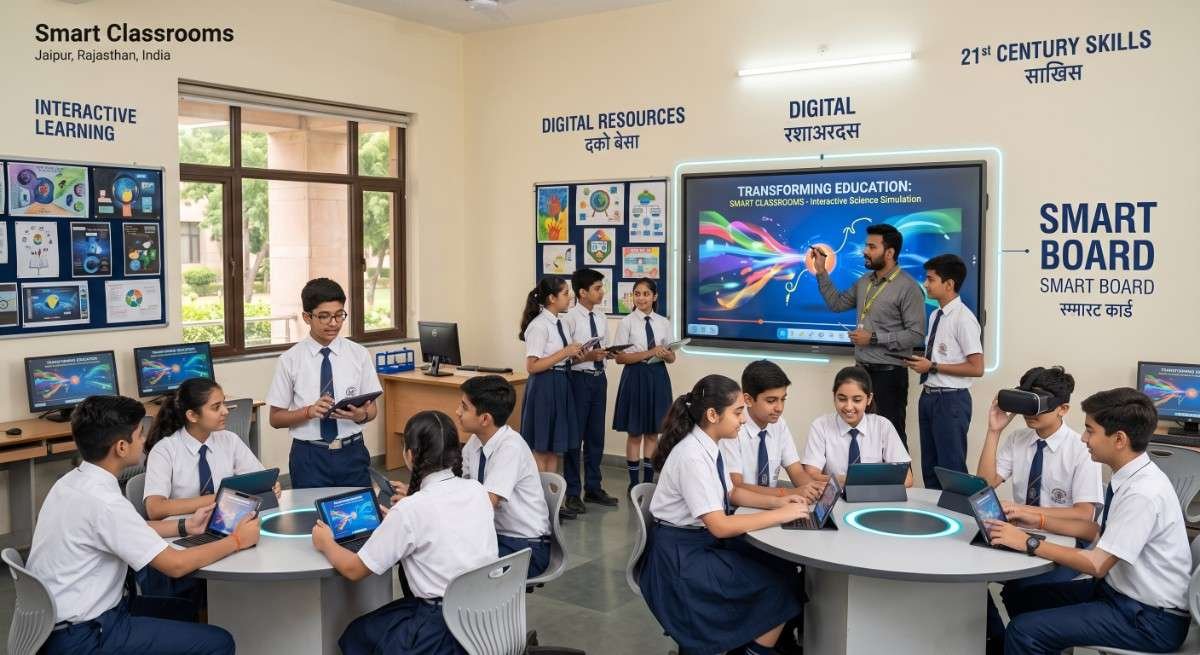
Smart classrooms combine advanced technology with effective teaching methodologies to create meaningful learning experiences. Interactive digital boards, projectors, educational videos, online quizzes, animations, and real-time presentations help students understand even the most complex concepts with ease. Visual learning not only improves memory retention but also keeps students motivated throughout the learning process.
Interactive Learning Experience
Instead of relying solely on textbooks, teachers use multimedia presentations, educational software, and digital simulations to explain concepts in science, mathematics, social studies, and languages. Students actively participate by solving quizzes, answering live questions, and collaborating with classmates during classroom activities. This interactive approach encourages curiosity, creativity, and confidence while making learning enjoyable.
Benefits for Students
- Improves understanding through visual learning.
- Enhances classroom participation.
- Develops communication and presentation skills.
- Encourages teamwork and collaborative learning.
- Builds confidence through interactive activities.
- Supports self-paced learning with digital resources.
Students become more engaged when lessons include animations, videos, practical demonstrations, and interactive discussions. The ability to visualize concepts helps learners retain information for longer periods and improves academic performance across various subjects.
Technology Integration
Modern classrooms are equipped with high-speed internet connectivity, smart boards, digital projectors, and educational applications that provide instant access to updated learning materials. Teachers can easily present diagrams, educational videos, virtual laboratory experiments, and real-world examples that make classroom sessions more informative and engaging. Students also gain valuable digital literacy skills that prepare them for higher education and future careers.
Teacher's Role
Teachers continue to play the most important role in the learning process. Technology acts as a powerful teaching aid that allows educators to explain topics more effectively while monitoring student progress through digital assessments and classroom activities. Personalized attention becomes easier because teachers can identify learning gaps quickly and provide additional support whenever required.
Skill Development
Smart classrooms help students develop essential 21st-century skills such as communication, creativity, collaboration, critical thinking, and digital literacy. Students learn how to research information responsibly, create presentations, solve real-world problems, and work effectively in teams. These experiences prepare them for academic success as well as professional careers in an increasingly technology-driven world.
Future-Ready Education
As education continues to evolve, technology-enabled learning ensures that students remain prepared for future opportunities. By combining innovative teaching methods with practical learning experiences, smart classrooms bridge the gap between theoretical knowledge and real-world application. Students become independent learners who are confident, adaptable, and capable of facing future challenges with determination.
Conclusion
Our Smart Classroom initiative reflects our commitment to delivering quality education through innovation and technology. By creating an engaging learning environment supported by experienced teachers and advanced digital resources, we empower students to explore new ideas, think creatively, and achieve academic excellence. Smart classrooms are not merely about using technology; they are about transforming education into an inspiring journey that prepares every learner for lifelong success.